Make smarter logistics decisions with precise, real-time, and independent container intelligence data and a powerful collaboration workflow.


.webp)


8,700+
96%
30-50%
4-10
Supply chain managers

.webp)
Optimise supply chain logistics
Supply chain managers rely on precise container tracking to ensure timely deliveries and optimal inventory management. With real-time intelligence, they can monitor shipments, anticipate delays, and proactively adjust logistics plans. For example, an automotive company managing spare parts can track container movements, minimise disruptions, and enhance supply chain efficiency.
Real-time visibility allows them to proactively manage potential disruptions, reducing demurrage and detention fees.
Enhanced tracking capabilities improve communication with stakeholders, fostering trust and reliability in the supply chain.
Freight forwarders
.webp)
Prioritise time & resources effectively
Freight forwarders coordinate shipments for multiple clients, necessitating efficient tracking to manage diverse logistics operations. By having real-time visibility into container locations, the freight forwarder can prioritise shipments, allocate resources effectively, and ensure timely deliveries, enhancing customer satisfaction and operational efficiency.
Access to real-time data enables them to optimize routes and consolidate shipments, leading to cost savings and improved service levels.
Accurate tracking information enhances their ability to provide clients with reliable delivery timelines, strengthening business relationships.
Port & warehouse managers
.webp)
Port & warehouse managers
A software provider offers an ERP system to manage the entire supply chain, including containerised shipments. Integration of container tracking data into the ERP system ensures accurate and up-to-date information, enabling the organisation to make informed decisions, optimise inventory levels, and enhance overall supply chain visibility and control.
Integrating their devices with advanced tracking systems fills visibility gaps, especially during ocean transit where traditional tracking is limited.
This integration allows for comprehensive, end-to-end monitoring solutions, appealing to clients seeking enhanced supply chain transparency.
Commercial teams
Benchmark port performance
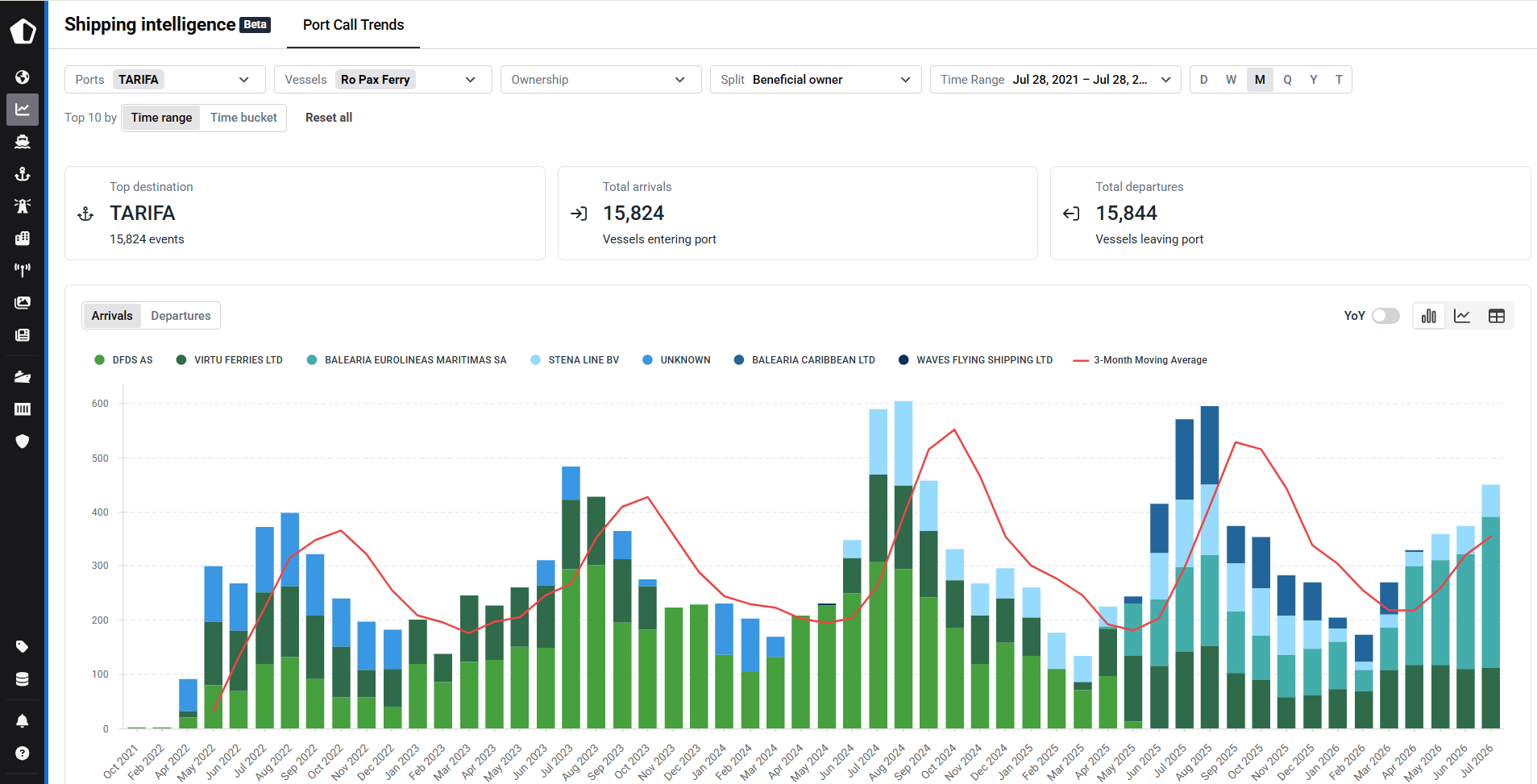
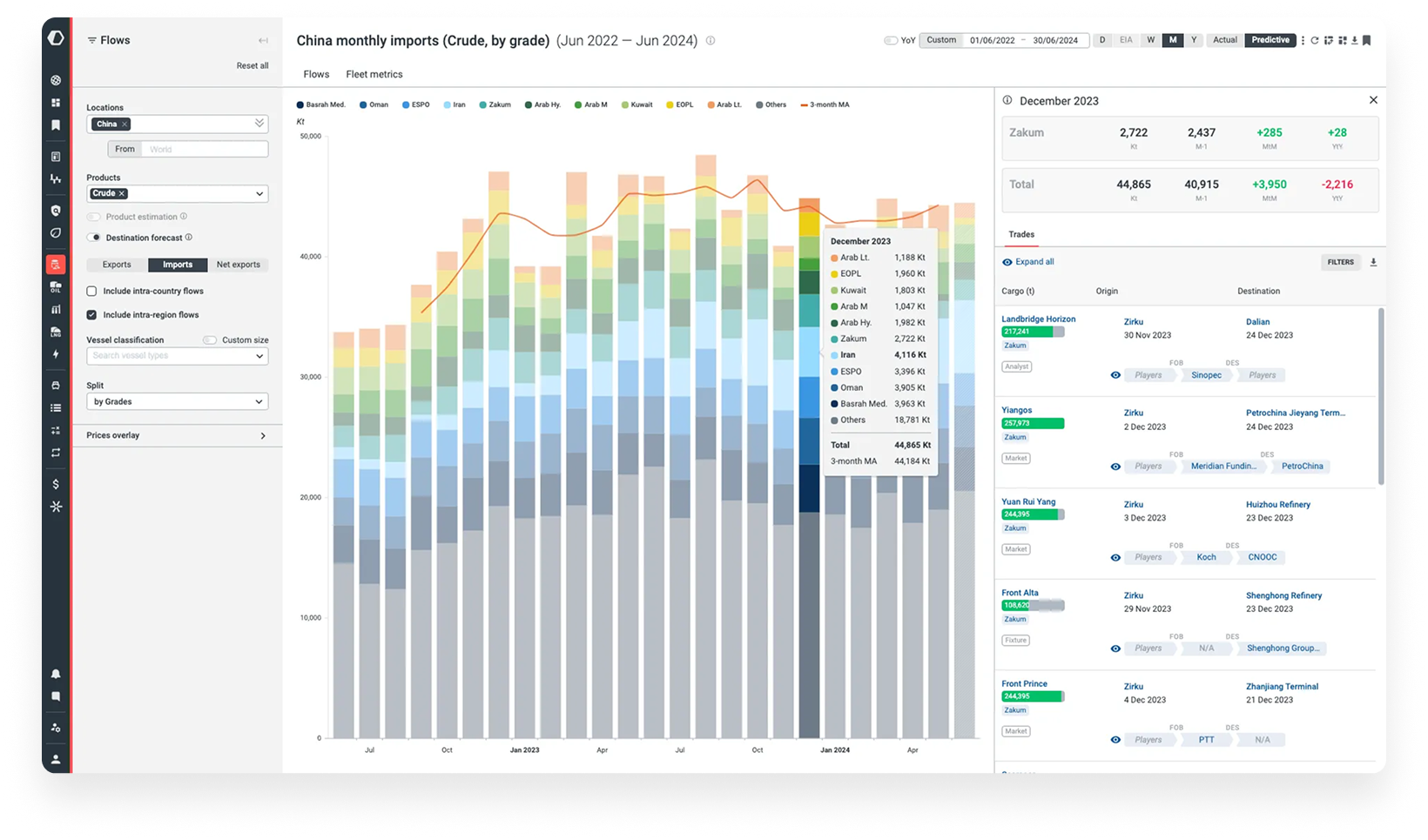
Historical vessel activity provides port strategy and commercial teams with an independent view of how their port is performing against competing gateways. By comparing arrivals and departures over time, teams can identify whether traffic is growing or declining, determine which vessel segments are driving the change and distinguish broader market movements from changes specific to their own port.
Breaking activity down by vessel type, size, flag, beneficial owner, operator or commercial manager adds further competitive context. Teams can identify which shipping companies are increasing their presence at competing ports, understand how their own customer and vessel mix is evolving and use these trends to support commercial development, infrastructure planning and longer-term port strategy.

Identify customer trends
Changes in port activity can reveal which owners, operators and commercial managers are expanding or reducing their presence at a port. Commercial teams can analyse historical calls by company to identify customers whose activity is growing, established accounts whose presence is declining and companies that are becoming more prominent at competing gateways.
Combining company information with vessel type, size and capacity provides further context on the commercial significance of those changes. This gives port teams an evidence base for prioritising account development, investigating lost or emerging traffic and preparing more informed conversations with shipping customers.
Understand how the vessel mix is changing
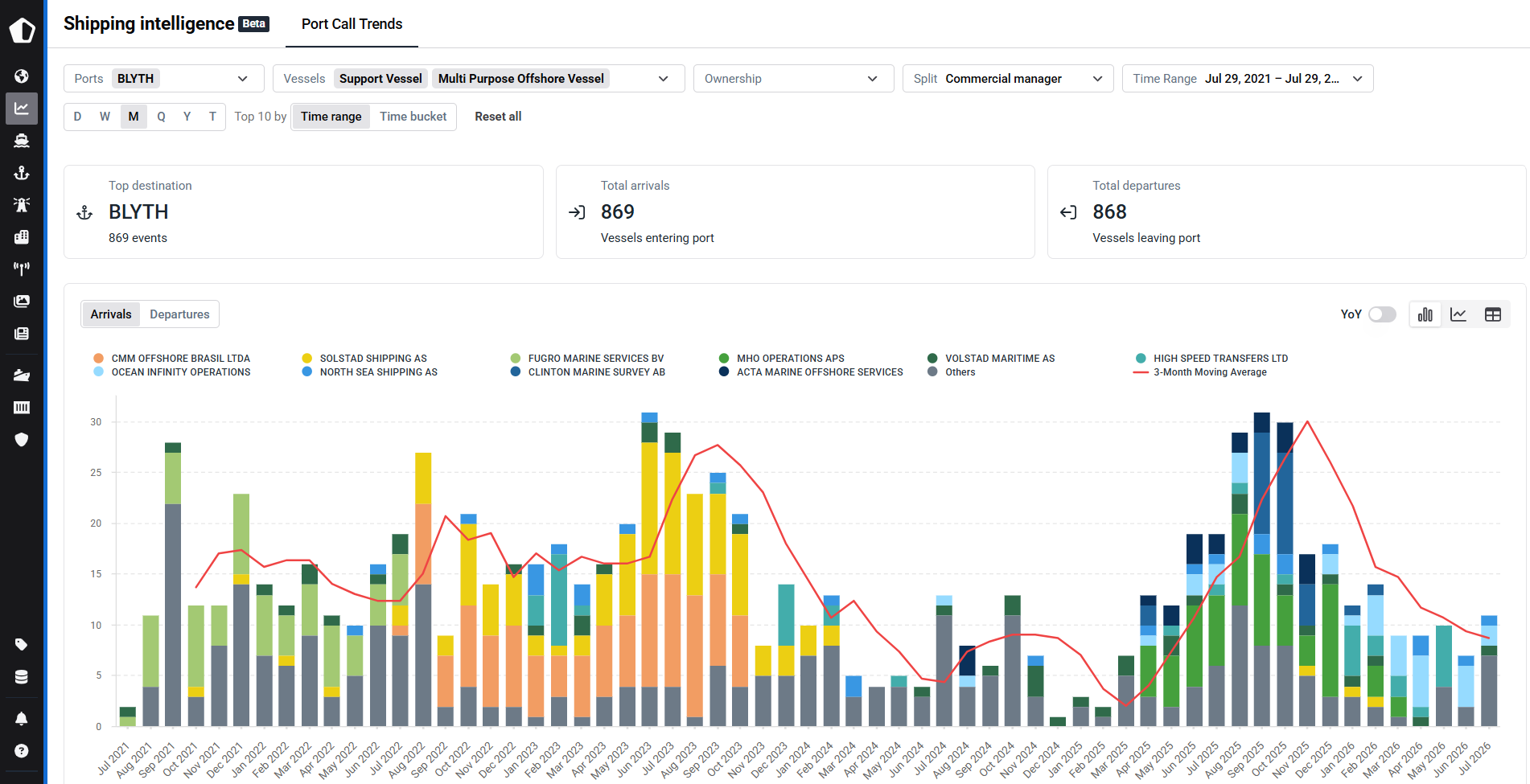
Total port calls alone can hide important changes in the type of traffic a port is handling. Port strategy teams can break historical arrivals and departures down by vessel type, capacity, size, flag and other characteristics to understand how the composition of their traffic is evolving.
A stable headline call count, for example, may coincide with changes in vessel size or a shift between vessel segments. Comparing those patterns with competing ports provides additional context for infrastructure and commercial planning, helping teams understand not simply whether traffic is changing but what kind of fleet their port increasingly needs to serve.

.webp)
FAQ
Kpler provides real-time container tracking across ocean, port, and inland segments—giving you continuous visibility into shipment location, status, and estimated arrival. This visibility enables you to anticipate delays, adjust logistics plans proactively, and minimise demurrage and detention fees. Freight forwarders can prioritize shipments, allocate resources more effectively, and consolidate loads based on actual movement data rather than estimates. Rather than reacting to delays after they occur, you can see problems developing and adjust plans before disruptions cascade—reducing costs, improving service levels, and strengthening customer relationships through reliable delivery timelines.
Kpler combines real-time container tracking with port congestion data, vessel delay intelligence, and weather impact forecasting to alert you to potential disruptions before they affect your shipments. You can see when ports are building up congestion, when vessels are behind schedule, or when weather will impact specific routes—giving you time to reroute, adjust timing, or communicate proactively with customers. For supply chain managers managing critical parts (like automotive spare parts), this early warning transforms supply chain management from reactive problem-solving to proactive risk management. You reduce emergency costs, maintain customer trust, and keep production flowing smoothly.
Kpler's real-time tracking data, port performance analytics, and route optimisation intelligence enable freight forwarders to make smarter consolidation and routing decisions. Rather than consolidating based on schedules or guesses, you can see actual container flows, identify opportunities to consolidate shipments on the same vessel or service, and select routes based on current port congestion and vessel performance. This data-driven approach reduces empty container movements, improves vessel utilisation, and lowers overall transportation costs. Simultaneously, you improve service levels by selecting the fastest, most reliable routes rather than defaulting to standard schedules.
Yes. Kpler's APIs enable seamless integration of real-time container tracking, port performance data, and vessel intelligence directly into ERP and TMS systems—eliminating manual data entry and keeping planning systems continuously updated. This integration ensures your entire organisation—procurement, supply chain, warehouse, and customer service teams—operates on current information automatically. When a shipment is delayed, your ERP knows it immediately and can adjust production schedules or customer communications. This automation improves decision quality, reduces errors, and frees your team to focus on strategic optimisation rather than routine status updates.
Kpler provides comprehensive, real-time visibility across ocean transit, port operations, and inland logistics—the complete journey from origin to destination. This end-to-end transparency enables you to provide customers with accurate, reliable delivery information, strengthening business relationships and reducing inquiry volume from concerned clients. Port and warehouse managers can track inbound containers in real time, optimise yard operations, and coordinate handoffs seamlessly. Supply chain managers can audit performance against commitments. This transparency transforms logistics from a black box where customers hope things arrive on time into a visible, predictable process that builds trust and confidence in your operations.