Clean-to-Dirty switching reshapes LR2/Aframax market balance
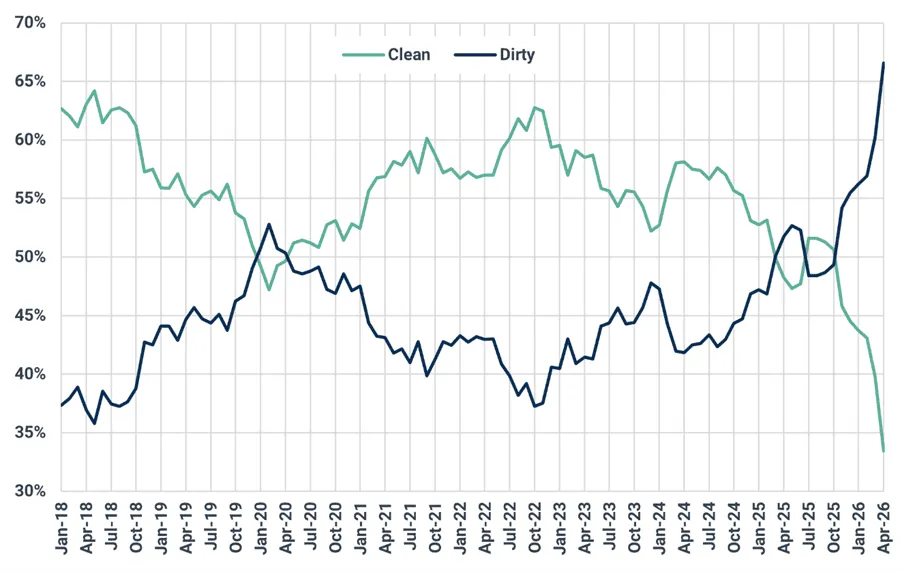
Clean-to-dirty switching has been the defining supply-side adjustment across tanker markets over the past two months, materially reshaping both clean and dirty segment balances. At its peak, more than a quarter of LR2 vessels previously trading clean migrated into dirty service, reducing the clean LR2 pool by 43 vessels, or approximately 20%. This contraction pushed the fleet to below Covid-era levels, providing critical support to clean tanker earnings during a period of disrupted Middle East Gulf flows.
Market & Trading Calls
- Clean-to-dirty switching has removed up to 20% of LR2 clean capacity and materially increased Aframax supply
- The shift accelerated the April correction in dirty tanker rates while tightening clean markets
- Switching is now stabilizing, limiting further supply shocks but capping upside across both segments
The driver of this shift was a pronounced earnings dislocation. Between early March and mid-April, clean LR2 earnings traded at an average discount of $87,000/day to dirty equivalents, creating a strong economic incentive to switch. This dynamic was reinforced by geopolitical disruption in the Strait of Hormuz. Increased demand for West of Suez crude for both short and long haul voyages drove US Gulf Aframax demand higher, lifting rates. On the clean side, the loss of MEG volumes was a major hit to LR2 demand, with the region accounting for 44% of LR2 ton-miles in 2025. As a result, owners rapidly redeployed coated tonnage into crude and fuel oil trades.
Share of LR2/Aframax coated fleet by cargo type
Source: Kpler

See why the most successful traders and shipping experts use Kpler