Maritime product update: Vessel Commercial Operator in Container Intelligence
TL;DR: In June 2026, we shipped a targeted but high-impact update to Container Intelligence. Every vessel now shows its commercial operator as the primary carrier, eliminating ambiguity between technical ownership and operational control. This matters most for teams running carrier-level analytics, including waiting time benchmarking, terminal performance, and service intelligence just got sharper.
In one sentence: This update lets you isolate exactly which vessels a specific shipping line operates, not just which vessels are associated with its services.
What Kpler shipped in June
This release addresses a persistent data clarity problem: when filtering by carrier, Container Intelligence previously returned all vessels associated with a service, including alliance partners. That made it hard to draw clean lines between operators.
The fix is structural. The commercial operator is now surfaced as the primary carrier on each vessel, giving analysts a reliable, unambiguous signal for carrier-level work.
Vessel Commercial Operator overview
What it is: The shipping line commercially responsible for operating a vessel is now clearly identified and displayed as the primary carrier in Container Intelligence, distinct from technical ownership or alliance association.
Who it's for: Container analysts, freight market researchers, and terminal teams who need to attribute vessel activity to a specific operator rather than a service or alliance group.
Why it matters: Alliance structures mean a single service can involve vessels from multiple operators. Filtering by carrier used to pull in all of them. Now you can isolate exactly which vessels a specific operator controls, making analyses like waiting time benchmarking and terminal performance by carrier far more reliable.
At a glance:
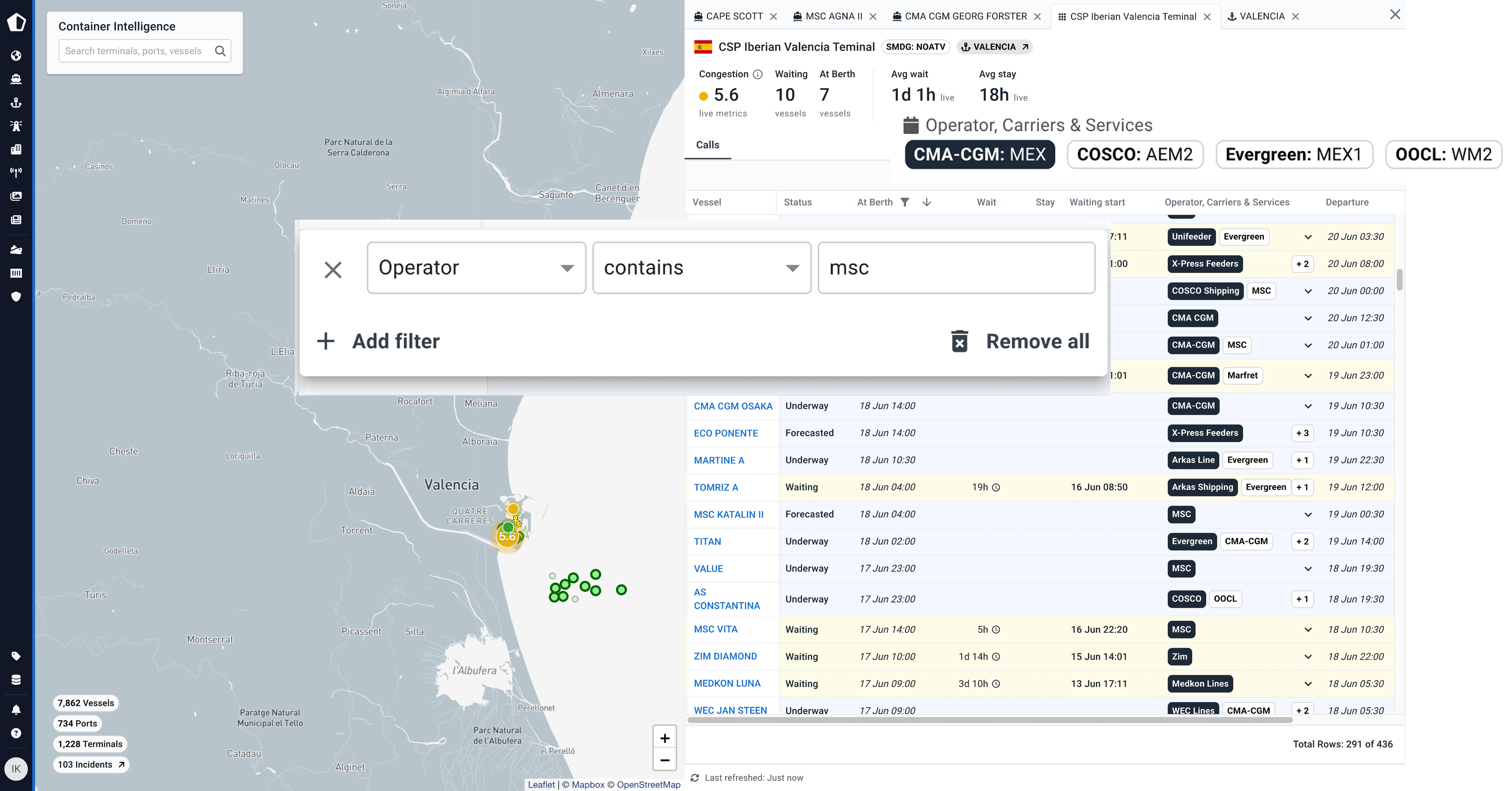
- Commercial operator highlighted at the top of the carrier list on each vessel profile
- New "operator" filter in terminal lineups
- Available via the vessel API endpoint — no breaking change, no action required for existing users
- Generally available
- Help Center article

See why the most successful traders and shipping experts use Kpler
Get real-time container visibility, from vessel to terminal