
Water levels, heat and stretched rail capacity stress German logistics
German oil logistics are under increasing strain as low Rhine water levels and a heatwave put pressure on already stretched distribution systems.
Market & Trading Calls
- Bullish barge freight as low water reduces functional capacity along the Rhine
- Potential for tighter diesel markets in Germany as falling water levels compound strained rail systems, making oil product distribution harder
- Bullish inland diesel prices as increased logistical costs are passed along the value chain
Water levels at Kaub — the key chokepoint on the Middle Rhine — are expected to fall below 100 cm in the coming days, according to the Federal Waterways and Shipping Administration (WSV). Barges moving oil products, primarily diesel/gasoil and gasoline, along the waterway will operate at approximately half capacity at these levels. Barge freight rates across the Amsterdam-Rotterdam-Antwerp hub have reached their highest level since July 2025 (Argus), and prices into Basel, Switzerland, are rising as more vessels are required to move the same volume of material.
The fall in water levels continues a trend visible since April, with levels at Kaub consistently below the five-year average and tracking close to 2022; a particularly bad year for Rhine navigation also affected by summer heatwaves.
Kaub Water levels (cm)
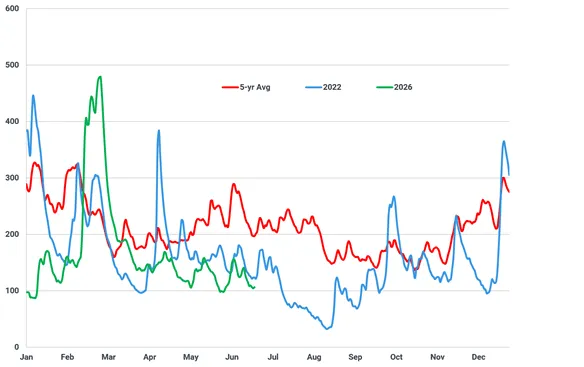
Source: Federal Waterways and Shipping Administration (WSV), provided by the Federal Institute of Hydrology (BfG)

See why the most successful traders and shipping experts use Kpler